CIEL Worldview

Defending the right to a healthy planet.
March 26, 2013
by Admin
0 comments

#Whatwillittake for the World Bank to Uphold Human Rights?


Kris Genovese

Kris Genovese

By Kris Genovese

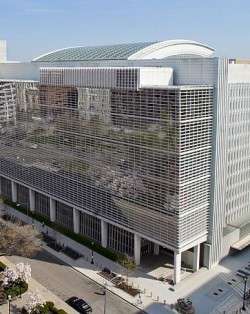
World Bank President Jim Kim has challenged the world with a new campaign, #whatwillittake to end poverty?  But it’s not just what you do, it’s how you do it. Economic development will not improve the lives of people unless it is accompanied by the guarantee of the full enjoyment of their human rights. Projects financed by the World Bank Group, like the Protection of Basic Services Program in Ethiopia or Dinant in Honduras—to name two recent examples, can, and sometimes do, violate human rights, leaving the very people the Bank aims to support even worse off.   As the World Bank undertakes a major review of its environmental and social standards, we’d like you to ask President Kim, #whatwillittake for the World Bank to uphold human rights?

Over the last two decades—mainly in response to controversial projects—the Bank developed a piecemeal set of environmental and social standards, the so-called safeguard policies, whose purpose is to ensure that the Bank “does no harm.” But if you take a look at these policies, you won’t see much mention of human rights.  But now there is a chance to change that.  In October 2012, the World Bank launched the first review of its safeguard policies.  The review is expected to take two years, with multiple opportunities for public input.

The WB financed a problematic land-titling project in Cambodia intended to improve security of tenure. Breaches of Bank policy contributed to Boeung Kak Lake residents being arbitrarily excluded from land titling and, ultimately, forcibly evicted by a private developer. Photo Credit: Sahmakum Teang Tnaut

You wouldn’t think that it would be so controversial for the Bank to make a commitment to uphold human rights.  After all, as a specialized agency of the United Nations, the Bank must act consistently with the UN Charter, which requires “[u]niversal respect for, and observance of, human rights and fundamental freedoms for all…”  Moreover, member States (including in their roles as Executive Directors and borrowers of the Bank) are themselves bound by international human rights treaties to which they are parties.  For you legal wonks out there, you can read our more detailed argument in a letter we sent to President Kim late last year with Amnesty International and Human Rights Watch.

But you don’t have to take my word for it.  Raquel Rolnik, the UN Special Rapporteur on adequate housing, in a recently published report on her mission to the World Bank, says it short and sweet:

The World Bank should adopt safeguards policies aligned with the international human rights obligations of its member States and clients. Incorporating human rights protections will help member States fulfill their human rights obligations and improve development outcomes by ensuring respect for the rights of those the Bank seeks to benefit.

The remnants of a forced eviction near Boeung Kak Lake, Cambodia. Photo Credit: Sahmakum Teang Tnaut

In the face of the legal, moral, and economic arguments in favor of the Bank adopting human rights requirements, the World Bank hides behind a stale argument that its Articles of Agreement (signed before the Universal Declaration of Human Rights) prevent it from considering human rights issues. Our friend, Dominic Renfrey, from ESCR-Net, does a great job of debunking the argument.

Here’s where you come in.  The first consultation period for the safeguard review ends in one month on April 21st.  We’re asking you to send an email to the U.S. Department of the Treasury (Treasury represents the United States on the World Bank Board) and to the World Bank to tell them that the safeguard policies must uphold human rights.  Specifically, we’re asking the Bank to undertake human rights due diligence, including:

(1) A commitment not to finance activities likely to cause or contribute to human rights abuses;
(2) Human rights impact assessments for all Bank-financed activities; and
(3) Policies that are consistent with human rights standards.

For those of you in the United States, we’ve set up an action here.
For those outside the United States, we’ve set up an action here.


The Chixoy Hydro-Electric Dam in Guatemala received funding from the World Bank. Surrounding communities were forcibly relocated and continue to fight for access to potable water and electricity. Photo Credit: Amanda Kistler

P.S. Stay tuned for more on this next month.  Together with International Accountability Project, we’re cooking up a new initiative to better track the human rights impacts of projects financed by the World Bank and other multilateral development banks!


February 20, 2013
by Admin
0 comments

What industry groups forgot to mention about the impact of regulation on innovation

By Baskut Tuncak

What are the drivers of innovation?  This was the question behind new research CIEL released this week, which clearly illustrates that stronger laws to regulate chemicals are a driver of innovation, and also create a safer marketplace.  Forbes broke the story on Wednesday and the report has received attention from policymakers, industry leaders and environmental health advocates alike.  One example of increased innovation following stronger regulations highlighted in our report is this spike in patents for phthalate alternatives after stronger laws were enacted to protect people, especially children, from these widely used plasticizers:

The response from industry groups that seem to prefer the status quo?  “There is no evidence that stricter chemical laws promote innovation,” states one trade association for chemical manufacturers in a Bloomberg BNA article covering our report.  We’ve heard this one before, right?  The truth is, innovation is not merely about the invention side of the equation, such as discovering new chemicals and new applications for chemicals, but enabling the adoption of better ideas and ensuring progress towards a healthy environment.  In other words, stricter laws increase the supply of and demand for safer alternatives.  This is a crucial aspect of how regulation drives innovation in the chemical industry.

The American Chemistry Council, the trade association for the world’s largest chemicals manufactures, points to a 2012 report for the European Commission (REACH Innovation Report) as proof that regulation stifles innovation.  The report cites responses to a survey of companies that 43 percent of companies covered by a European Union chemical regulation program known as REACH reported that the regulation had a negative impact on innovation, compared with 13 percent that said it had a positive effect.  But there is more to the REACH Innovation Report than what ACC is letting on.

First, nearly half of the companies increased spending on innovation.  Among respondents, 46% reported an overall increase “in expenditure on [research and development (R&D)] and other innovative activities.”  One of the two reasons cited was that “new opportunities had been opened up due to the coming into force of the Regulation.”   In other words, new markets were created, leading to new investment and the potential for new jobs.

Second, companies remain committed to innovation.  The REACH Innovation Report’s authors state “despite having to bear the additional costs of REACH, firms have continued to innovate and are keen to continue to do so.”

Third, some large companies report a shift of interest to new substances following REACH.  These companies are major spenders in the field of R&D and innovation.

Fourth, the European chemicals industry actually grew following the enactment of REACH.  This growth was in spite of the worst economic conditions for Europe in decades in the years after REACH entered into force (2007).

And last, but certainly not least, companies are directing their innovation towards safer alternatives.  According to the REACH Innovation Report “the survey findings suggest some long term shift in the orientation of R&D towards more health-safety-environment (HSE) goals is occurring…related to the stimulus provided by REACH.”

It is apparent that the survey results cited by the ACC stand in clear contradiction with these overwhelmingly positive aspects of the REACH regulation on chemical innovation in the REACH Innovation Report.  With emerging economies like China overtaking traditional leaders the US and Western Europe in bulk chemical manufacturing, the future of the chemical industry lies not in the status quo mix of chemicals, but instead in businesses that respond to consumer demand by investing in the development of safer chemicals. Policymakers should feel emboldened by our findings to enact stronger laws governing hazardous chemicals that will benefit both the economy and the right to a healthy environment.

February 8, 2013
by Admin
0 comments

Lend no evil

By Kris Genovese

Kris Genovese

Kris Genovese

It’s a truism in environmentalism that the farther you are from the impact of your action, the less you know and, for the most part, the less you care.  That’s just what the International Finance Corporation (IFC)—the private sector lending arm of the World Bank—has done through its investments in so-called financial intermediaries (FIs).  A financial intermediary can be a commercial bank, private equity fund, microfinance institution, or insurance company.  So, basically, the IFC lends money to other banks who, in turn, lend it to…

Well, that’s the $20 billion question.  We don’t know whom the FIs lend to or what the impacts of that lending are.  And, as a 60-page audit released this week shows, neither does the IFC.  Continue Reading →

January 9, 2013
by Admin
0 comments

After Doha: “We will not be silenced!”

Now that the dust from Doha has settled and 2013 is off and running, we’ve had a chance to reflect on how the UN climate talks have, once again, left us asking… What have we achieved? How have we advanced the debate? Where do we go from here?

Like many other civil society groups, our assessment of COP18 was that it was plagued by failed ambition and unfulfilled promises – while countries recognized the need for urgent action to respond to climate change, they didn’t take the necessary action to protect the rights of peoples and communities affected by climate impacts. The talks demonstrated a serious lack of political will to take decisive action now, with governments punting critical decisions to the coming years.

And yet, the devastating impacts of climate change felt by peoples and communities around the world have made it all too clear: we need to act now before it’s too late.

Continue Reading →

December 13, 2012
by Admin
0 comments

France adopts ban on uses of BPA and DEHP

Baskut Tuncak

By Baskut Tuncak

And now for some good news.  Today, France adopted a ban on certain uses of two widely used hormone disrupting chemicals:  Bisphenol A (BPA), and the plasticizer di(2-ethylhexyl) phthalate, or DEHP for short.  Both BPA and DEHP are primarily used to make plastics—polycarbonate and PVC, respectively.   Millions of tons of each chemical are produced and used per year around the world, eventually finding their way into people (findings for BPA here, and DEHP here).  There are far too many specific uses to list them all here, but the French legislation applies to specific uses that give rise to exposure during critical windows of development for children:  food contact surfaces for BPA (e.g. baby bottles and epoxy linings of can for food and beverages), and DEHP in “tubes” (e.g. IV tubing) in medical facilities for pregnant women or children.

Hormone or, more technically, endocrine disruption is an inherent property of hundreds of chemicals, some of which have been banned due to their downstream effects such as cancer or effects on reproduction, but most of which remain in widespread use.  The U.S. based organization TEDX has identified over 800 chemicals with at least one peer-reviewed study demonstrating endocrine disrupting properties.

Continue Reading →

November 6, 2012
by Admin
0 comments

International community kicks it up a notch

By Baskut Tuncak Baskut-daryl-ciel

(This article originally appeared Oct. 11, 2012 at blog.saferchemicals.org)

Recently, the global community kicked it up a notch by issuing a simple statement on hormone disrupting chemicals during negotiations on a process intended to achieve the sound management of chemicals globally by 2020 (called “SAICM”).  Despite seeming like an innocuous statement, it lays the groundwork to allow countries from all across the world to take action on hormone disrupting chemicals.  This is a big step forward for the international community working to take action on toxic chemicals.

So what does the statement say? It recognizes and states, “the potential adverse effects of endocrine disruptors on human health and the environment [… and] the need to protect humans, and ecosystems and their constituent parts that are especially vulnerable.”

Well, we’ve known this for decades, right? True, but this seemingly obvious statement is the first global decision in international law on the urgent need for the global community to tackle endocrine disrupting chemicals globally.  It was reached by consensus among 122 governments and nearly 100 inter-governmental and non-governmental organizations, including representatives of chemical manufacturers.  And it stands in stark contrast to the actions of some of these 122 governments.  For example, after throwing in the towel on defending asbestos a few months ago, Canada is now defending the endocrine disruptor bisphenol A (BPA), despite banning BPA in baby bottles in 2010….puzzling, I know.

Continue Reading →

October 17, 2012
by Admin
3 Comments

“Land isn’t to be sold, it is to be defended”

By Amanda Kistler

Life is worth more than gold. No to mining." Sign hung outside entrance to the Tambor mine that community members have successfully blocked through a 24-hour, 7 day a week encampment since March 2012. La Puya, Guatemala

"Life is worth more than gold. No to mining." Sign hung outside entrance to the Tambor mine that community members have successfully blocked through a 24-hour, 7 day a week encampment since March 2012. La Puya, Guatemala

As we arrive in La Puya, an enormous banner spans the breadth of the roadway: “The extraction of our natural resources only means progress for the foreigners. NO TO MINING.” Past the banner at the entrance to the “El Tambor” project, owned by U.S.-based Kappes, Cassidy and Associates, more than 50 people are gathered in a cluster of brightly colored plastic chairs and stand to greet us. More banners and signs of solidarity surround the encampment. “We are all La Puya.” “Water is worth more than gold.” “All mines contaminate.” A thin gauzy sheet has been strung up between trees and hangs over the road to block the worst of the unrelenting sun. On the other side of the road, a makeshift kitchen has been erected between wooden poles holding up a laminate roof. The folks gathered, members of the communities of San José del Golfo and San Pedro Ayampuc, have been braving the elements – natural and otherwise – since the beginning of March, 24 hours a day, 7 days a week in order maintain a peaceful blockade to the only entrance to the mine. Continue Reading →

September 27, 2012
by Admin
1 Comment

Community Leaders Meet to Discuss Relocation in the Face of Climate Change

By Alyssa Johl and John Crump*

Two different parts of the world, one common problem

This week, community leaders from two small villages in very different parts of the world will meet on Bougainville Island in Papua New Guinea (PNG) to discuss a common problem:  their need to relocate as a result of climate change. The communities of Newtok, Alaska, and the Carteret Islands, Papua New Guinea, are among the first in the world to choose relocation as the best means of adapting to the effects of a changing climate and ensuring their cultural survival. Continue Reading →

September 27, 2012
by Admin
0 comments

At the Crossroads for Global Chemical Safety

By Baskut Tuncak

Baskut Tuncak, Staff Attorney

Next week, negotiators from over 150 countries and other stakeholders will convene in Nairobi, Kenya, to discuss the future of global chemicals management.  These critical negotiations come at decisive juncture for the Strategic Approach to Chemicals Management (SAICM), with only eight years left on its ambitious mandate to ensure sound chemicals management—eight years in which developing regions face rapidly increasing risk of exposure to dangerous chemicals.  A recent report by the UN Environment Programme (UNEP), the Global Chemicals Outlook (GCO), highlights the global nature of the chemicals industry and chemical safety.  The GCO highlights three factors responsible for increasing the vulnerability of people living in developing economies to chemical exposure. Continue Reading →

August 1, 2012
by Admin
0 comments

U.S. Senate Committee Sends a Global Message on Eliminating Toxic Chemicals

By Baskut Tuncak

Senators Lautenberg and Durbin, pushing to fix a broken chemical law

For the first time in 36 years, the U.S. Congress took a significant step towards fixing the ineffective law that primarily governs the use of toxic chemicals in America’s workplaces, homes, schools, and almost every other facet of our everyday lives.  This is a monumental step, not just for the U.S., but for public health around the globe. Continue Reading →